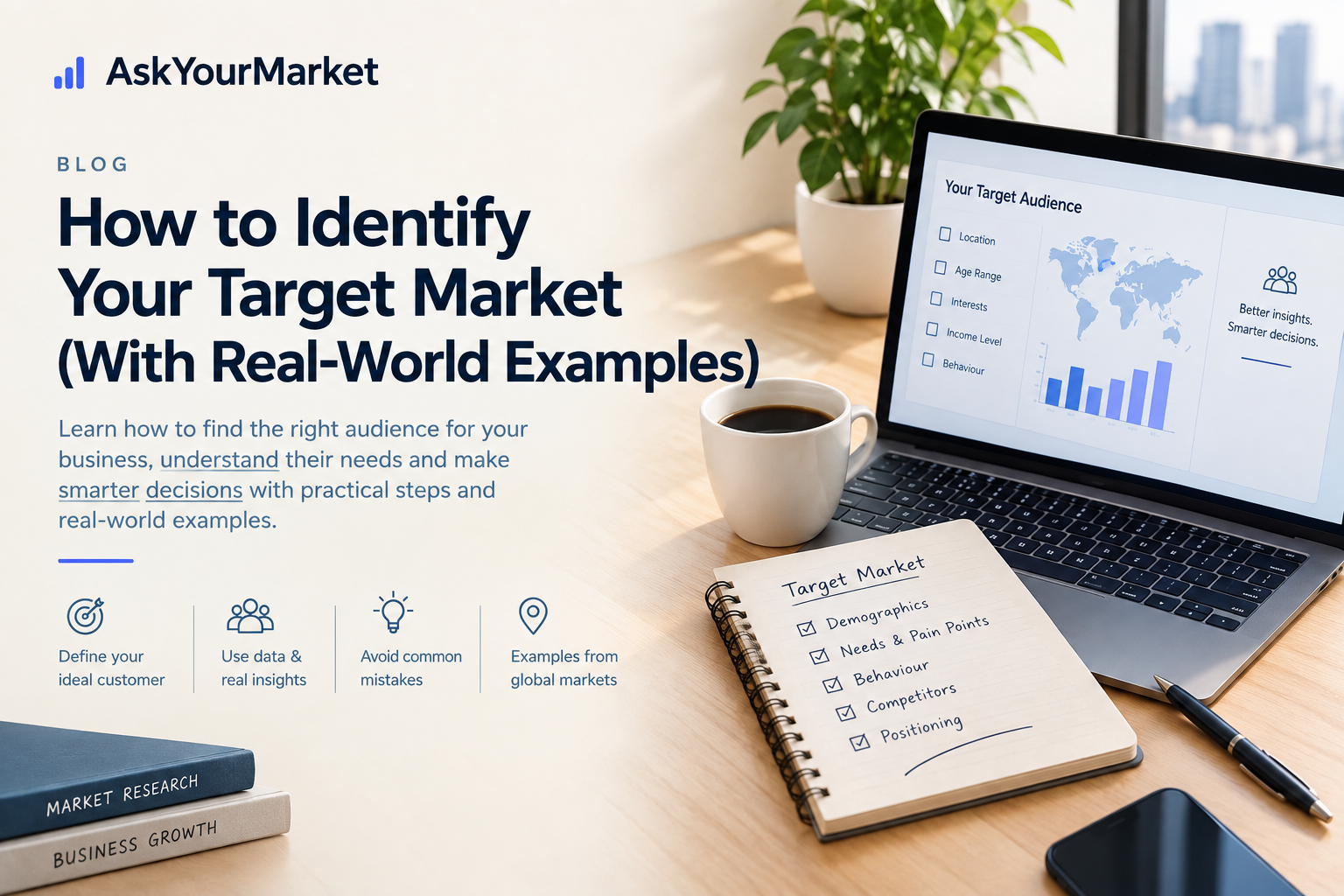
How to Identify Your Target Market in 2026: A Step-by-Step Guide
You can have a great product, a well-designed website and a strong marketing strategy but if you're trying to sell to everyone, you're probably making things harder than they need to be.
One of the first questions every business should answer is:
Who is most likely to need, want and pay for what we offer?
That is the foundation of target market research.
Whether you're launching a SaaS product, opening a local business or selling to customers in another country, understanding your audience helps you make better decisions about your product, pricing and marketing.
Here's how to identify your target market without making the process unnecessarily complicated.
What is a target market?
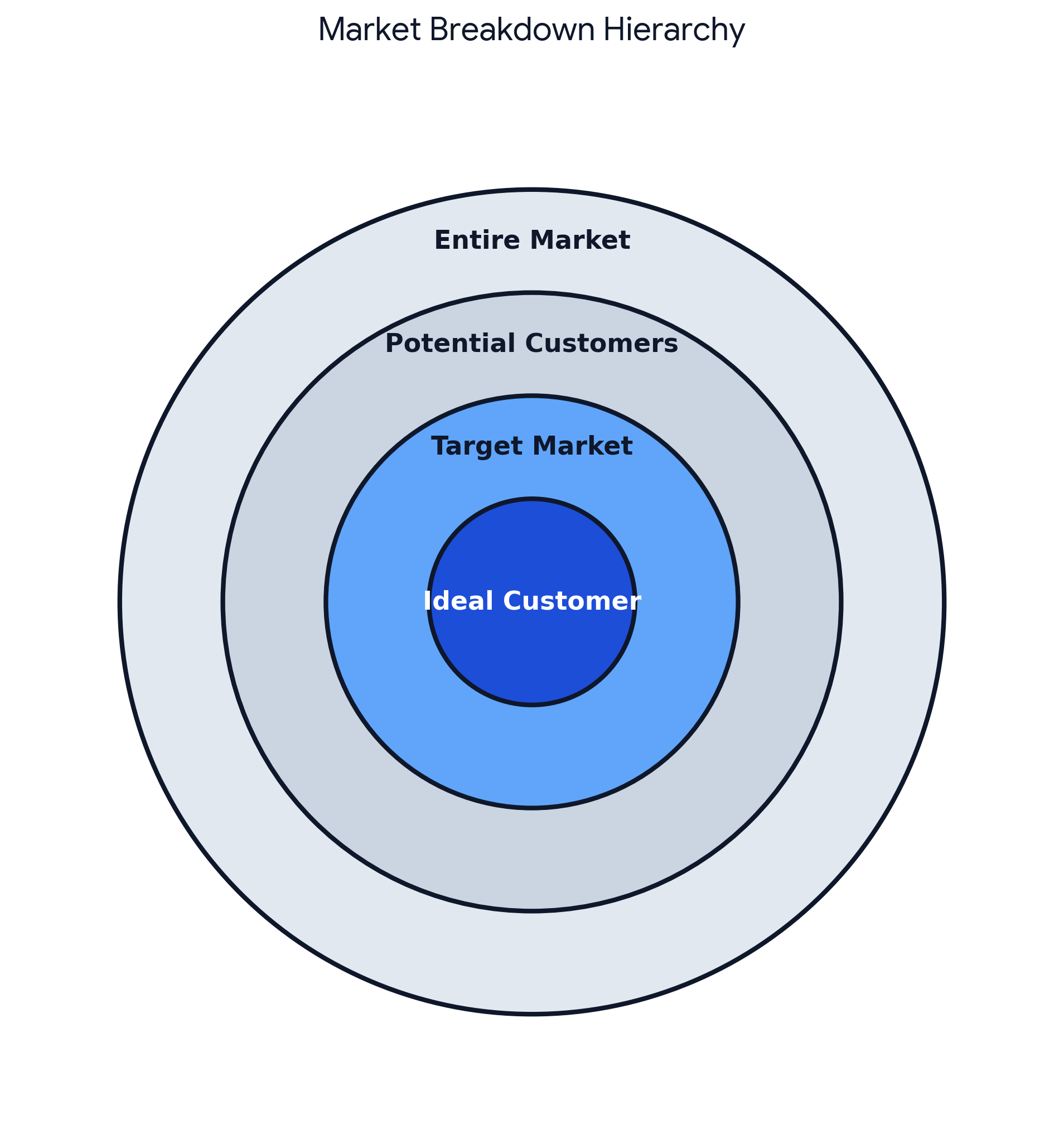
Your target market is the specific group of people or businesses most likely to be interested in your product or service.
For example, a fitness app might target university students, busy professionals or people training for a marathon.
All three groups may be interested in fitness, but their needs, budgets and buying behaviour can be very different.
A useful target market is more specific than "people who need fitness."
It might be:
University students aged 18–25 who want affordable home workouts and flexible fitness plans.
That description gives you something to research.
1. Start with the problem you solve
Before defining your audience, understand the problem your business is trying to solve.
Ask yourself:
- What problem does my product address?
- Who experiences this problem most frequently?
- How are people solving it today?
- What makes the problem frustrating or expensive?
- Would people actually pay for a better solution?
For example, if you're building a market research tool, your audience might not simply be "businesses."
It could be startup founders who need to test ideas quickly, marketing teams comparing product concepts or small businesses that cannot afford traditional research agencies.
The problem helps you narrow the audience.
2. Define your ideal customer
Your ideal customer is a more detailed description of the person or business you want to serve.
Consider:
Demographics
Age, location, occupation and income, where relevant.
Behaviour
What they currently buy, use, search for or do.
Needs
What problems they are trying to solve.
Preferences
What matters when comparing different products.
Buying behaviour
What influences their purchasing decision.
You don't need to create an elaborate persona with a fictional name and favourite coffee order.
A useful customer profile should help you make real business decisions.
3. Research what customers actually do
One of the biggest mistakes in customer research is relying entirely on what people say they might do.
Someone may say they would buy your product.
That doesn't necessarily mean they will.
Look for evidence of existing behaviour.
What products are people already using? What are they complaining about? What do they search for? What alternatives do they pay for?
Customer reviews, online communities, competitor feedback and direct interviews can help you understand these patterns.
The goal is to discover the difference between what customers say they want and what they actually need.
4. Use market research to test your assumptions
Once you have an initial idea of your target audience, research can help you test whether your assumptions are correct.
For example, you might believe that small business owners care most about price.
But your research could reveal that saving time is more important.
Or perhaps you discover that your strongest potential customers are not small businesses at all — they're marketing teams at larger companies.
This is why market research should happen before you invest heavily in building or marketing a product.
It gives you an opportunity to change direction while the cost of doing so is still relatively low.
5. Segment your target market
Not every customer in your market is the same.
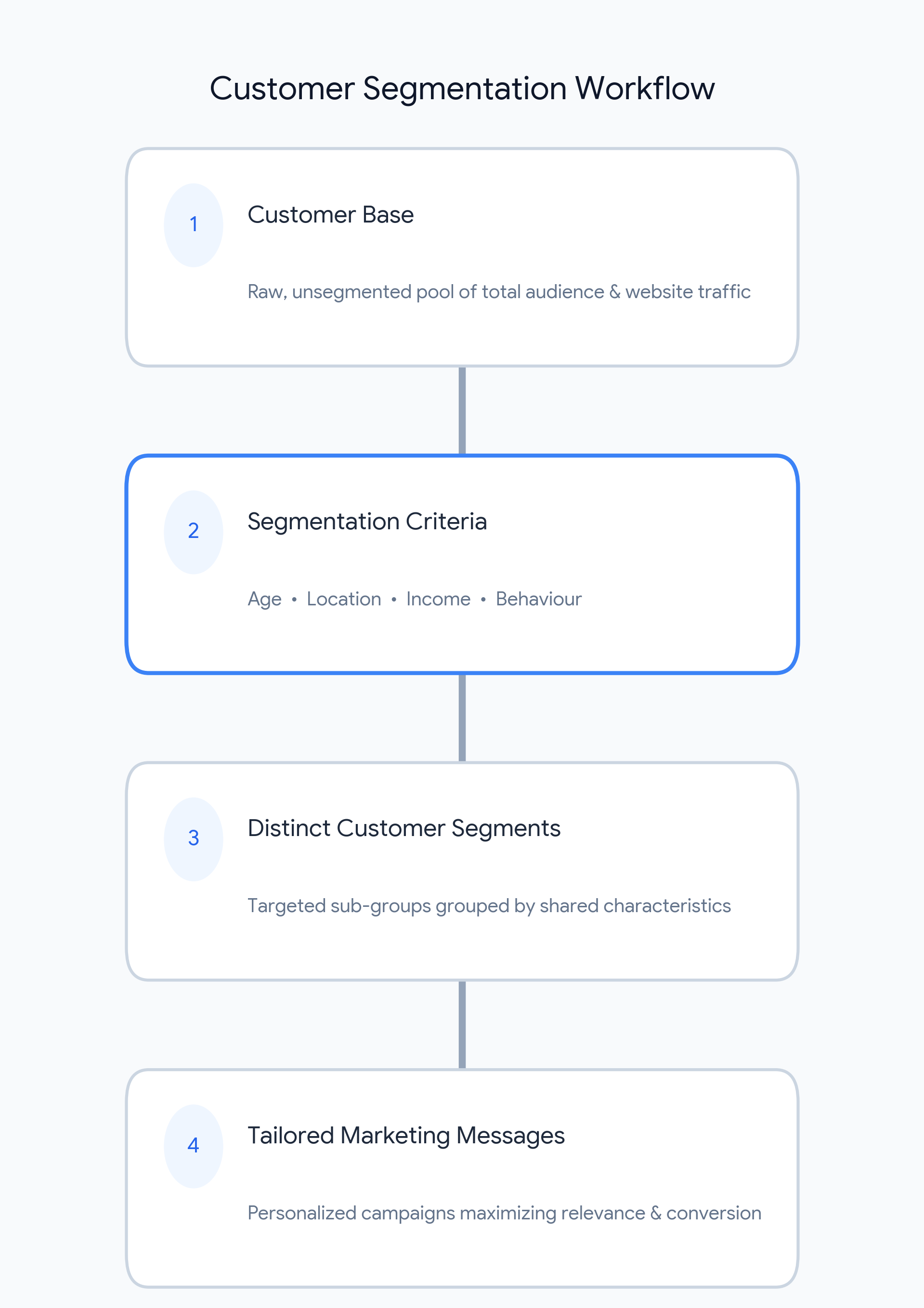
Market segmentation involves dividing your audience into smaller groups based on characteristics that matter to your business.
You might segment customers by:
- Age
- Location
- Income
- Industry
- Buying behaviour
- Product needs
- Price sensitivity
For example, a SaaS business selling analytics software might discover that startups care about affordability, while larger companies care more about integrations and security.
Both groups may be interested in the product.
But they need different messaging.
The better you understand these differences, the more relevant your marketing becomes.
6. Consider location and local market differences
Your target market can change significantly depending on where you operate.
A product that works well in the United States may need a different pricing strategy in Sri Lanka.
A service designed for customers in Singapore may need to account for different spending habits, competition and expectations.
This is where geographic market research becomes important.
Instead of assuming that customers everywhere behave the same way, investigate:
- Local competitors
- Regional pricing
- Customer preferences
- Cultural differences
- Purchasing power
- Distribution channels
- Local regulations
For businesses entering new markets, these details can make the difference between a promising idea and an expensive mistake.
7. Use AI to explore different customer segments
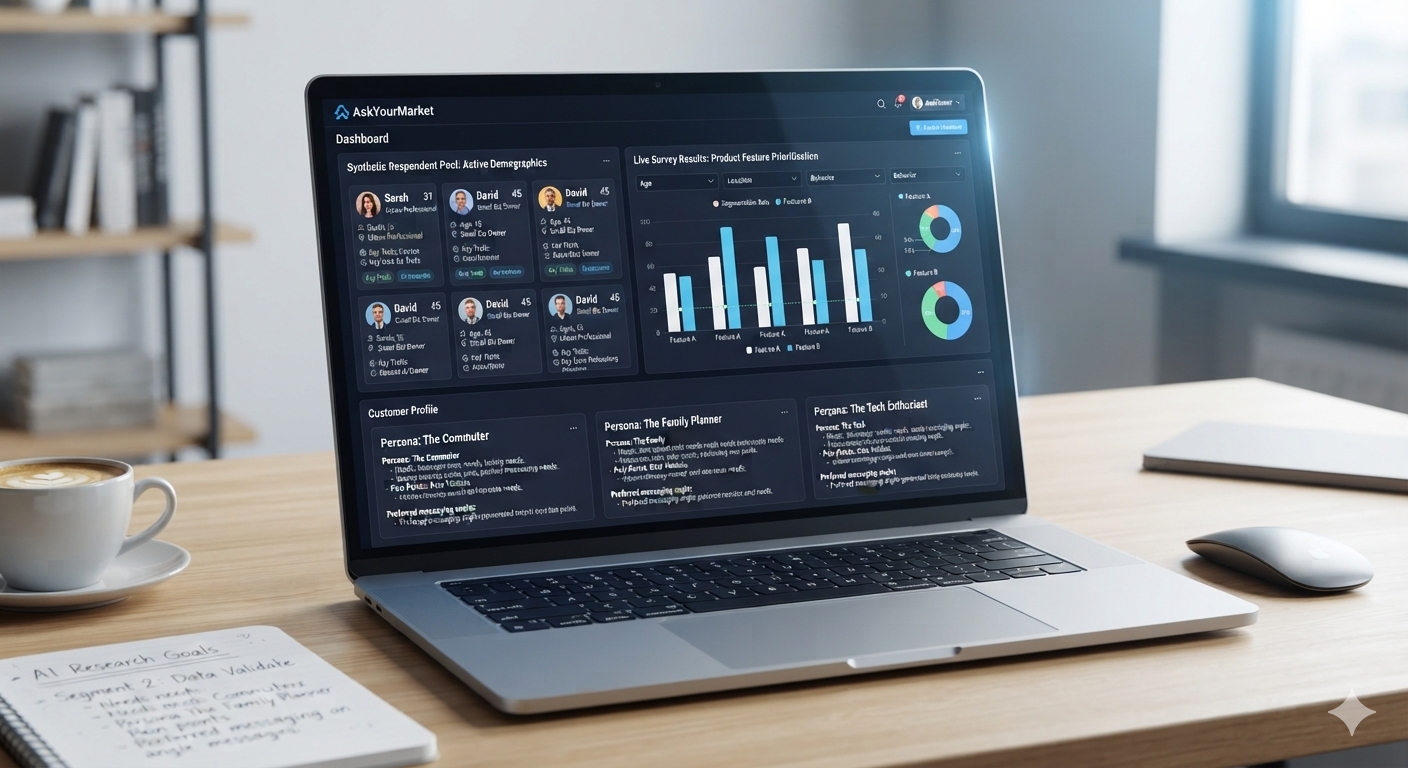
AI-powered market research tools can help businesses explore potential audiences more quickly.
You can use AI to generate customer research questions, compare audience segments, analyse survey responses and explore how different groups might react to a product.
Synthetic respondents can also help you investigate early assumptions before conducting larger research with real customers.
For example, a founder might compare three potential audiences:
- University students
- Young professionals
- Small business owners
The objective is not to assume that AI-generated responses represent real customers perfectly.
Instead, it is to explore different possibilities, identify useful questions and decide which audience deserves deeper research.
At AskYourMarket, this is the type of early-stage research we want to make easier.
8. Avoid targeting too many people at once
A common mistake is trying to serve everyone from day one.
A more practical approach is to identify your strongest initial customer segment.
Ask:
Who has the problem most urgently?
Who is easiest to reach?
Who is most likely to pay?
Who would benefit most from our solution?
You can expand your audience later.
Starting with a clear segment makes it easier to create relevant messaging, test your product and learn from your customers.
9. Create a simple target market statement
Once you've completed your research, summarise your audience in one sentence.
For example:
We help early-stage SaaS founders who need to validate product ideas quickly before investing in development.
Or:
We provide affordable meal delivery for busy professionals in Singapore who want convenient weekday lunches.
A good target market statement should make it clear who you serve, what problem you solve and why your audience needs your product.
Final thoughts
Identifying your target market is not about finding the largest possible audience.
It's about finding the right audience.
The more clearly you understand your customers, the easier it becomes to build a product they need, create marketing that resonates and make decisions based on evidence rather than assumptions.
You don't need to know everything about your market before you begin.
Start with a problem, define a possible audience, research their behaviour and keep testing what you learn.
Better customer understanding leads to better business decisions.
And if you're looking to explore different audiences before committing to expensive research, AskYourMarket can help you investigate those early questions with AI-powered market research.
Frequently Asked Questions
What is target market research?
Target market research is the process of understanding the people or businesses most likely to buy your product or service.
How do I identify my target audience?
Start by understanding the problem you solve, researching existing customer behaviour, analysing competitors and defining the characteristics of your ideal customer.
What is the difference between a target market and a target audience?
A target market is the broader group of potential customers. A target audience is the specific segment you focus on when communicating or marketing your product.
Can AI help identify a target market?
Yes. AI can assist with customer research, audience segmentation, survey analysis and exploring potential customer needs. Its findings should be validated with real-world research when decisions require reliable evidence.